
Who Can Buy Property in the UAE & Why Location Matters
UAE property ownership rules differ significantly for nationals and foreign investors. Understanding your eligibility and choosing the right emirate are the first critical steps toward a successful property purchase.
UAE Buyer Eligibility
- UAE Nationals: Can own freehold and leasehold property anywhere in the UAE with no restrictions.
- Foreign Investors & Expats: Can own freehold property in designated zones (e.g., Dubai Marina, Downtown Dubai, Palm Jumeirah). Leasehold options are available across all emirates for 99-year terms.
- Visa Requirements: You must hold a valid UAE residence visa to purchase. Tourist visas don't qualify; you'll need an employment visa, investor visa, or retirement visa.
Freehold vs. Leasehold
Freehold: You own the property outright indefinitely. Available to foreigners in approved zones. Higher investment confidence and resale value.
Leasehold: You lease the land for 99 years (renewable). More affordable entry point. Available across all emirates. Still provides strong ownership security and rental potential.
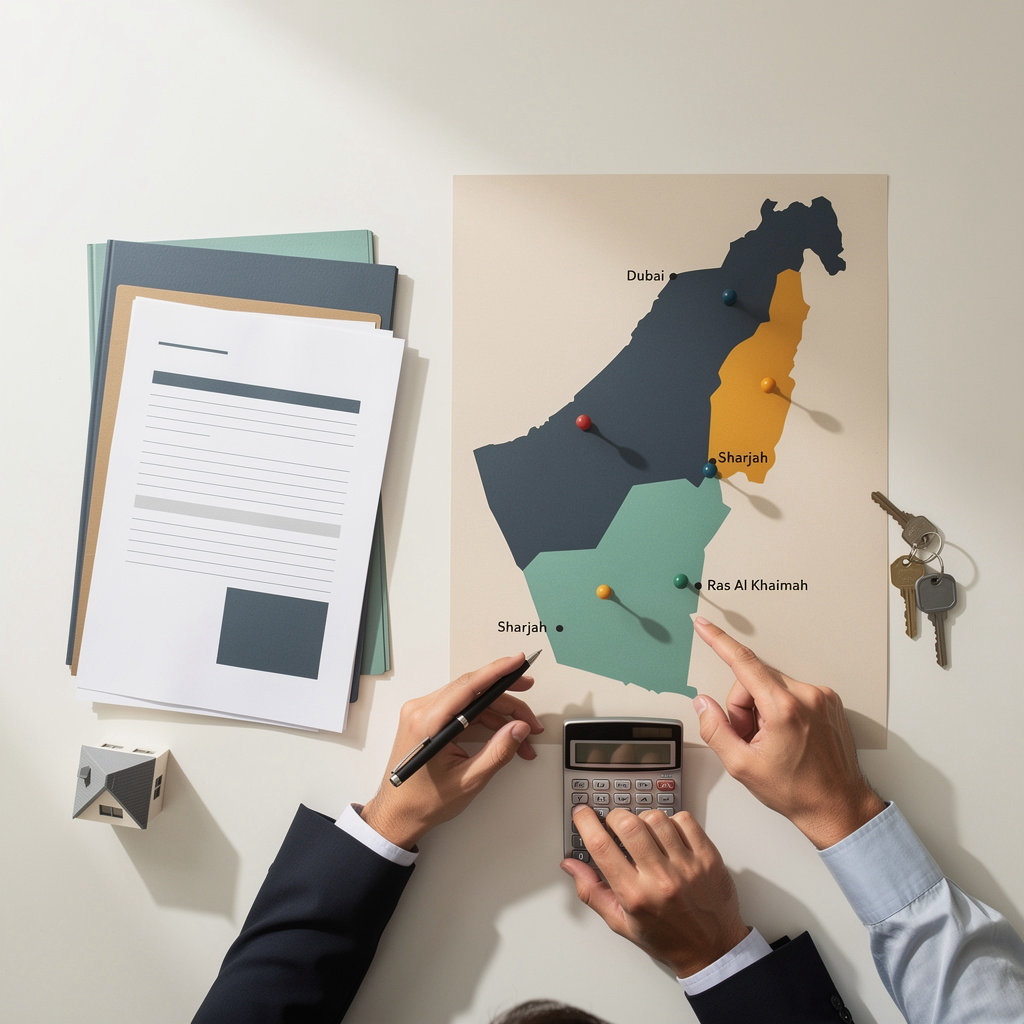
Why Different Buyers Choose Different Emirates
Dubai
Best for: Investors, lifestyle seekers, expats
- • Strong capital appreciation and rental yields
- • World-class infrastructure and amenities
- • International buyer base and high liquidity
- • Diverse communities for every lifestyle
- • Premium pricing; higher entry cost
Sharjah
Best for: Families, budget-conscious buyers
- • 30-40% lower prices than Dubai
- • Excellent schools and family amenities
- • Growing infrastructure and new developments
- • Higher rental yields (5-6%)
- • Close proximity to Dubai (20 min commute)
Ras Al Khaimah
Best for: Growth investors, lifestyle seekers
- • Emerging market with high appreciation potential
- • 50% lower entry cost than Dubai
- • Scenic mountain and beach communities
- • New infrastructure and tourism development
- • VAT advantages (5% vs. standard rates)
Other Emirates to Consider
Abu Dhabi: Capital city with strong government stability, premium pricing, and diverse communities. Best for luxury investors with higher budgets.
Ajman, Fujairah, Umm Al Quwain: Budget-friendly options with emerging markets. Ideal for cost-conscious buyers and investors seeking high rental yields.
Ready to Find Your Ideal Emirate?
Dubai Homez helps buyers across the UAE understand eligibility rules, compare emirates by budget and lifestyle, and find properties that match their goals. Whether you're a first-time buyer, investor, or relocating family, their nationwide coverage and expert guidance simplify the entire process.
Compare Properties Across All EmiratesHow to Verify a Property & Protect Your Investment
Before signing any agreement, you need confidence that the property is legally sound and free of hidden issues. This practical checklist covers RERA verification, legal red flags, property inspection essentials, and documentation requirements—so you can buy with complete peace of mind.
Step 1: RERA Title Deed Verification
The Real Estate Regulatory Agency (RERA) maintains a public database of all registered properties in Dubai. This is your first and most critical verification step.
What to Check on RERA:
- • Ownership history: Verify the current owner's name matches the seller.
- • Encumbrances: Check for any mortgages, liens, or legal claims against the property.
- • Title status: Confirm the property is registered and the title is clear.
- • Property details: Verify size, location, and unit number match the listing.
How to access RERA: Visit the RERA website and search by property reference number or owner name. The search is free and takes minutes.
Step 2: Identify Legal Red Flags
Certain legal issues can prevent a sale or expose you to liability. Watch for these warning signs:
⚠ Unpaid Mortgages
If the seller still owes money on the property, the bank has a lien. The property cannot transfer until the mortgage is paid off. Ask for proof of mortgage clearance.
⚠ Disputes or Legal Cases
Check if the property is involved in any ongoing disputes, inheritance claims, or court cases. RERA registration should be clear, but confirm with the seller's legal representative.
⚠ Zoning or Planning Issues
Verify the property is zoned for its current use (residential, commercial, mixed-use). Check the municipality website or ask the seller's agent for zoning confirmation.
⚠ Outstanding Utilities or Fines
Unpaid water, electricity, or municipality fines become your responsibility. Request utility statements and a municipal clearance certificate from the seller.
⚠ Missing Permits or Alterations
If the property has been renovated or extended, confirm all permits were obtained. Unauthorized alterations can trigger municipality fines or forced restoration.
⚠ Title Disputes or Co-Ownership
If multiple people own the property, all must agree to the sale. Confirm the seller has sole authority to sell, or that all co-owners have signed consent.
Step 3: Property Inspection Essentials
A physical inspection reveals structural issues, maintenance problems, and hidden costs. Use this checklist during your property visit:
Structural & Safety:
- Cracks in walls, ceilings, or foundation
- Water stains, dampness, or mold (especially in bathrooms and kitchens)
- Leaking pipes or plumbing issues
- HVAC (air conditioning) condition and age
- Electrical wiring and outlet safety
Utilities & Systems:
- Water pressure and hot water availability
- Air conditioning units (split or central) and cooling efficiency
- Kitchen appliances (if included) and their condition
- Gas or electric cooker, water heater, and backup power systems
Community & Amenities:
- Common areas (lobby, hallways, parking) cleanliness and maintenance
- Elevator functionality and safety features
- Security and access control systems
- Parking availability and condition
Pro Tip: Consider hiring a professional home inspector for villas or large properties. They can identify structural and mechanical issues you might miss. Cost is typically AED 500–1,500 but can save you thousands in unexpected repairs.
Step 4: Documentation Checklist
Before you sign the Sales and Purchase Agreement (SPA), confirm you have or will receive all required documents:
Seller Must Provide:
Buyer Must Provide (for Mortgage):
Important: The seller is responsible for providing clearance documents. If they refuse or delay, this is a red flag. Never proceed without these documents—they protect you from inheriting the seller's debts or legal issues.
HOA Fees & Community Obligations
If the property is in a gated community or apartment building, it's subject to community fees (HOA maintenance, common area upkeep, security, etc.).
What to verify:
- • Monthly or annual HOA fee amount
- • What's included (maintenance, security, utilities, parking)
- • Any special assessments or upcoming major repairs
- • Community rules (pet restrictions, rental policies, etc.)
- • Proof that the seller's fees are paid in full
Why it matters: Unpaid HOA fees become your responsibility. High fees can significantly impact your monthly costs. Restrictive community rules may limit your use or resale options.
Off-Plan Property Verification
If you're buying off-plan (before construction), additional safeguards apply:
Developer Track Record:
Research the developer's history. Have they completed previous projects on time? Do they have a good reputation? Check online reviews and ask current residents of their other developments.
Escrow Protection:
Your down payment should be held in an escrow account, not transferred directly to the developer. This protects you if the project is abandoned. Confirm the bank and escrow terms in your contract.
Payment Schedule:
Typical off-plan payments are: 20% down, 70% during construction (in installments), 10% at handover. Confirm the payment schedule and what triggers each payment.
Completion Timeline & Penalties:
The contract should specify a completion date and include penalties if the developer delays. Understand what constitutes "substantial completion" and when you take possession.
Inspection & Handover:
Plan a thorough inspection before final payment. Document any defects (snag list) and ensure they're corrected before you take possession.
Your Verification Checklist: Quick Summary
Ready to Buy Safely?
Verification can be complex. Dubai Homez provides detailed documentation guides, legal checklists, and expert support to help you navigate every step—and find properties that meet your needs.
Call Dubai Homez: +971 52 325 4607Or email your questions for personalized guidance.
Legal Documents & Requirements: What You Need to Know
Buying property in the UAE involves several legal steps and documents. Understanding each stage—from offer to final registration—removes confusion and helps you navigate the process with confidence. Dubai Homez guides buyers through every step.
The Property Purchase Journey: Six Key Stages
Stage 1: Offer Letter & Negotiation
Once you've found a property you like, you submit an offer letter stating your proposed price and key terms. This isn't legally binding—it's your opening bid. The seller can accept, reject, or counter-offer. Negotiate until both parties agree on price, payment terms, and closing date.
What to watch for: Ensure the offer clearly states the property details, price, and any conditions (e.g., subject to mortgage approval). Keep records of all correspondence.
Stage 2: Sales and Purchase Agreement (SPA)
Once you and the seller agree on terms, a formal Sales and Purchase Agreement (SPA) is drafted. This is a legally binding contract outlining all terms: property details, price, payment schedule, closing date, and conditions. Both buyer and seller sign the SPA. This is the most important document in the transaction.
What to watch for: Review the SPA carefully (consider hiring a lawyer). Ensure it includes: exact property description, price, payment milestones, closing date, responsibilities for utilities and fees, and any contingencies (e.g., mortgage approval, property inspection).
Stage 3: RERA Approval & Registration
In Dubai, the Real Estate Regulatory Authority (RERA) must approve the SPA. The seller's agent or lawyer submits the signed SPA to RERA for verification. RERA checks that the property is registered, the seller is the rightful owner, and there are no encumbrances (liens or disputes). Once approved, RERA stamps the SPA, making it official.
What to watch for: RERA approval typically takes 5-10 business days. Ensure the title deed is clear (no outstanding mortgages, court cases, or disputes). Ask your agent or lawyer to confirm RERA approval before proceeding.
Stage 4: Mortgage Documentation (If Applicable)
If you're financing the purchase with a mortgage, your lender requires additional documents and appraisals. The bank verifies your income, credit, and the property value. Once the bank approves the mortgage, they issue a mortgage offer letter. You'll sign a mortgage agreement, and the bank becomes a lien holder on the property until the loan is repaid.
What to watch for: Understand all mortgage terms: interest rate, loan-to-value (LTV) ratio, monthly payment, and any prepayment penalties. Ensure the property appraisal aligns with the purchase price. Factor in closing costs (registration, legal fees, inspection) when calculating your total cash needed.
Stage 5: Transfer of Title at Land Department (DLD)
On closing day, you and the seller (or their representatives) visit the Dubai Land Department (DLD) to officially transfer ownership. The seller signs over the title deed; you sign as the new owner. The DLD records the transfer, and you receive a new title deed in your name. This is the moment you legally own the property.
What to watch for: Bring all required documents: passport, visa, salary certificate, bank statements, SPA, RERA approval, and any mortgage documents. The DLD charges registration fees (typically 4% of property value, split between buyer and seller). Ensure the new title deed is issued correctly with your name and no errors.
Stage 6: Final Registration & Utility Setup
After the DLD transfer, you're the legal owner. But there are final administrative steps: register the property with the municipality, transfer utility accounts (electricity, water, gas, internet) to your name, and obtain a certificate of ownership from the DLD. Some communities also require HOA membership registration.
What to watch for: Check for any outstanding utility bills or HOA fees owed by the previous owner. Confirm all utilities are transferred to your name. Obtain proof of ownership from the DLD for your records. If there's a mortgage, ensure the lender has registered their lien correctly.
Documents You'll Need: Complete Checklist
Personal Documents
- Passport (original + copies)
- UAE Visa/Residence Permit
- Emirates ID
- Marriage certificate (if applicable)
- Divorce decree (if applicable)
Financial Documents
- Salary certificate from employer
- Bank statements (6 months)
- Proof of down payment funds
- Tax returns or income tax certificate
- Employment contract (copy)
Property Documents
- Sales and Purchase Agreement (SPA)
- RERA approval (stamped SPA)
- Original title deed (seller's)
- NOC from developer (off-plan)
- Property inspection report
Mortgage Documents
- Mortgage offer letter from bank
- Mortgage agreement (signed)
- Property appraisal report
- Title insurance (if required)
- Bank statements showing down payment
All Fees Involved: What to Budget For
| Fee Type | Who Pays | Approximate Cost | Notes |
|---|---|---|---|
| DLD Registration Fee | Split (buyer & seller) | 4% of property value | Usually 2% buyer, 2% seller |
| Real Estate Agent Commission | Seller (typically) | 2-3% of sale price | Negotiable; sometimes buyer pays |
| Legal/Lawyer Fees | Buyer (optional) | AED 2,000–5,000 | Highly recommended for first-time buyers |
| Property Inspection | Buyer | AED 500–1,500 | Optional but smart for peace of mind |
| Mortgage Processing Fee | Buyer | 1–2% of loan amount | Charged by the bank |
| Title Insurance | Buyer (if required) | AED 1,000–3,000 | Required by some banks; protects against title defects |
| Utility Setup & Transfer | Buyer | AED 500–2,000 | Electricity, water, gas, internet connections |
| HOA Fees (if applicable) | Buyer (annual) | AED 500–5,000+ | Maintenance for community amenities |
Tip: Budget for 5–8% of the property purchase price to cover all closing costs and fees. This helps you avoid surprises on closing day.
Red Flags & Legal Pitfalls to Avoid
Seller Still Has an Unpaid Mortgage
Always verify that the seller's mortgage is paid off or will be cleared at closing. If not, the bank's lien remains on the property, and you can't get clear title.
Outstanding Utility or HOA Fees
Check that the seller has paid all electricity, water, gas, and HOA bills. You could inherit unpaid debts. Request a clearance letter from utilities and HOA.
Property Title Has Encumbrances or Disputes
RERA checks for court cases, liens, or disputes on the title. If any exist, the sale may not proceed until resolved. Always request a clean RERA search.
No Lawyer Review of the SPA
The SPA is your most important legal document. Never sign without understanding every clause. A lawyer review (AED 2,000–5,000) is worth the cost for peace of mind.
Off-Plan Property with Unproven Developer
Research the developer's track record. Delays and unfinished projects are common. Ensure your funds are held in escrow and the developer has adequate insurance.
Skipping the Property Inspection
A professional inspection (AED 500–1,500) can uncover structural issues, plumbing problems, or electrical hazards that could cost thousands to fix later.
Who Helps You Navigate the Process?
Real Estate Agent
A licensed agent helps you find properties, negotiate terms, and coordinate the transaction. They handle much of the paperwork and liaisons with the seller's agent and RERA.
Pros: Knows the market, handles logistics, usually paid by seller
Cons: May prioritize speed over your interests; conflicts of interest possible
Real Estate Lawyer
A lawyer reviews all legal documents, advises on your rights, and ensures the transaction is lawful and protects your interests.
Pros: Protects you legally; catches hidden issues; advocates for you
Cons: Costs AED 2,000–5,000; adds time to closing
Recommendation: Use both. An agent handles logistics; a lawyer protects your legal interests. Together, they ensure a smooth, safe transaction.
Timeline: From Offer to Closing
Day 1–3: Offer & Acceptance
Submit offer letter; negotiate terms; reach agreement.
Day 4–7: SPA Drafted & Signed
Lawyer or agent prepares SPA; both parties review and sign.
Day 8–15: RERA Approval
Agent submits SPA to RERA; RERA verifies title and encumbrances; approval stamped.
Day 16–25: Mortgage Approval (if applicable)
Bank processes mortgage; appraisal completed; mortgage offer issued.
Day 26–30: Final Walkthrough & Closing
Inspect property; verify condition; sign final documents at DLD; pay remaining funds.
Day 31+: Post-Closing
Title deed issued; utilities transferred; HOA registration; move in.
Total time: Typically 30–45 days from offer to closing. Off-plan properties may take longer due to developer coordination.
Ready to Navigate the Legal Process with Confidence?
Dubai Homez guides first-time buyers through every legal step—from SPA review to RERA approval to closing. Their legal and documentation expertise removes confusion and protects your investment.
Get Guidance from Dubai Homez
Three protections that simplify your purchase
Call Now