
Your Step-by-Step Guide to Buying a Home in Dubai
Buying property in the UAE doesn't have to feel overwhelming. Dubai Homez breaks the entire journey into clear, manageable steps—from understanding your budget and getting pre-approved, to exploring communities, comparing properties, making an offer, and closing the deal. Whether you're a first-time buyer or an investor, their guides and tools walk you through each stage with transparency and expert insight.
Step 1: Understand Your Budget & Mortgage Options
Learn how much you can afford, down payment requirements, and mortgage pre-approval basics.
Step 2: Get Pre-Approved by a Lender
Understand your loan-to-value (LTV) ratio and secure pre-approval before property hunting.
Step 3: Explore Communities & Neighborhoods
Compare Dubai's communities by lifestyle, budget, amenities, and investment potential.
Step 4: Compare Properties by Budget & Type
Use Dubai Homez's property matching tools to find homes that fit your criteria and budget.
Step 5: Make an Offer & Negotiate
Understand fair market pricing, inspection requirements, and offer negotiation strategies.
Step 6: Navigate Legal Docs & Close the Deal
Review required documents, understand DLD processes and fees, and complete your purchase.
Dubai Homez guides you through every step with educational content, mortgage calculators, community comparisons, legal checklists, and property matching tools tailored to your budget and buyer type. You won't navigate this journey alone.
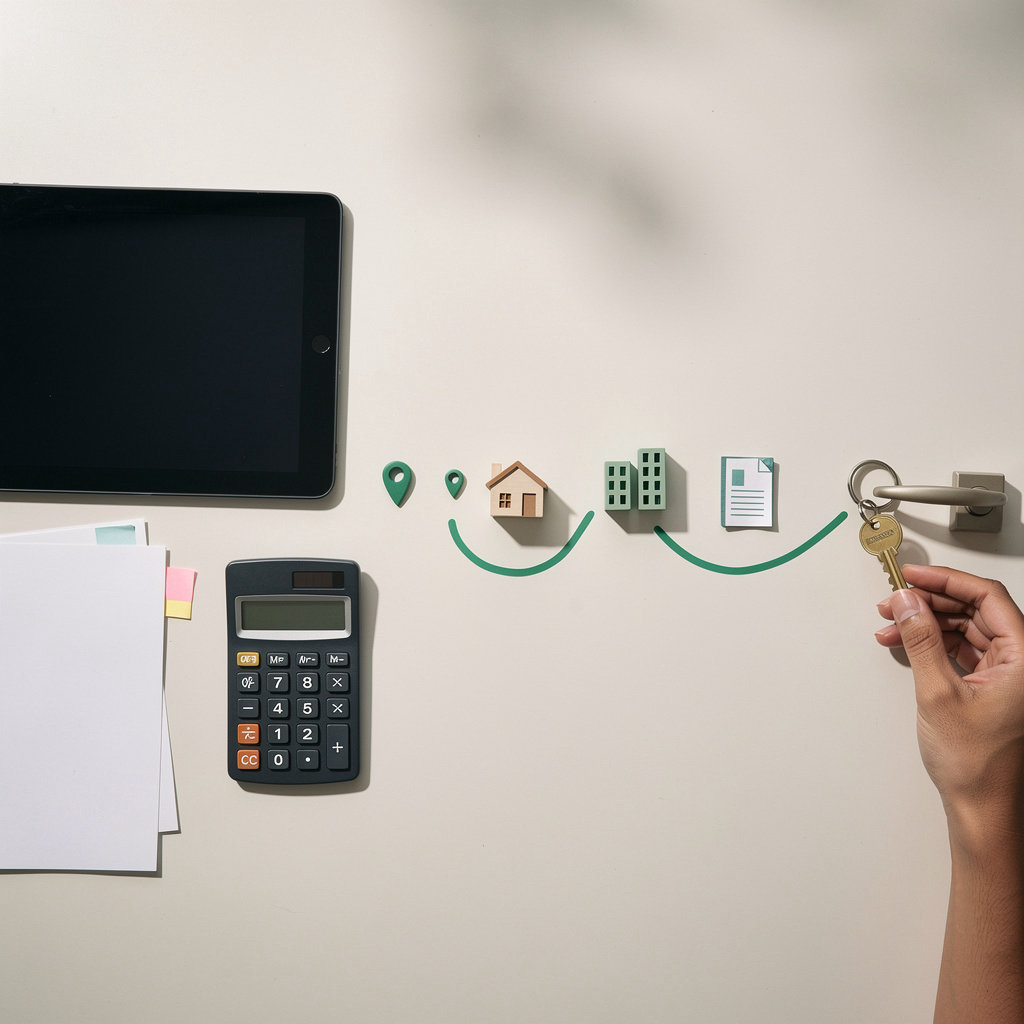
Step 1: Understand Your Budget & Mortgage Options
Before you start searching for properties, you need to understand how much you can actually afford and how mortgages work in the UAE. This step eliminates confusion and sets realistic expectations for your property search.
How Much Can You Afford?
Most Emirati banks follow a simple affordability rule: your monthly mortgage payment should not exceed 50% of your gross monthly income. This is called the debt-to-income ratio.
Example: If you earn AED 10,000 per month, your maximum monthly mortgage payment is AED 5,000. At typical interest rates (around 3–4%), this translates to borrowing roughly AED 1.2–1.5 million.
Note: This calculation assumes you have no other debts (car loans, credit cards). Existing debts reduce how much you can borrow.
Down Payment Requirements
In Dubai and across the UAE, first-time buyers typically need to save a 20% down payment. This means if you're buying a property for AED 500,000, you need AED 100,000 in cash upfront.
Example: Property price AED 500,000 → Down payment AED 100,000 → Loan amount AED 400,000
Tip: Some banks offer 15% down payment options for specific properties or borrower profiles, but 20% is the standard. Starting your search after you've saved your down payment prevents disappointment and speeds up the buying process.
Loan-to-Value (LTV) Ratio
LTV is the percentage of the property's value that the bank will lend you. In the UAE, the standard LTV for first-time buyers is 80%, meaning you cover 20% and the bank covers 80%.
Example: Property value AED 500,000 → Bank lends 80% (AED 400,000) → You pay 20% down (AED 100,000)
Why it matters: If you have limited savings but strong income, some banks may offer higher LTV (up to 85%) with slightly higher interest rates. Dubai Homez's mortgage guides explain these trade-offs in detail.
Monthly Payment Calculation
Your monthly mortgage payment depends on three factors: loan amount, interest rate, and loan term (typically 20–25 years in the UAE).
Example: Loan AED 400,000 at 3.5% interest over 25 years ≈ AED 1,800 per month (excluding insurance and registration fees).
Tip: Use Dubai Homez's mortgage calculator to test different loan amounts, interest rates, and terms. This helps you understand the real cost of a property before you fall in love with it.
Emirati Bank Lending Rules
- • Salary certificate: Banks require proof of stable income (typically 6+ months of salary slips).
- • Bank statements: You'll need 3–6 months of statements showing your down payment savings.
- • Interest rates: Currently range from 2.99% to 4.5% depending on your profile and bank. Shop around—rates vary significantly.
- • Loan term: Most banks offer 20–25 year terms. Longer terms mean lower monthly payments but more total interest paid.
The Pre-Approval Process
Before you start searching, get pre-approved by a bank. Pre-approval means the bank has reviewed your income and savings and confirmed how much they'll lend you.
Steps:
- Submit documents (salary cert, bank statements, ID copy)
- Bank reviews your application (3–5 working days)
- Receive pre-approval letter stating your loan amount
- Now you can search confidently knowing your budget
Pro tip: Pre-approval strengthens your offer when you find a property—sellers know you're a serious, qualified buyer.
Common Mortgage Mistakes First-Time Buyers Make
❌ Not Getting Pre-Approved First
Searching for properties before pre-approval wastes time and can lead to offers on properties you can't afford. Get pre-approved before you start looking.
❌ Ignoring Other Costs
Mortgage payment is only part of the cost. Budget for registration fees (~4% of purchase price), DLD fees, insurance, utilities setup, and maintenance. These add 5–10% to your total cost.
❌ Stretching Too Thin
Just because a bank approves you for AED 1.5M doesn't mean you should borrow it. Leave room in your budget for savings, emergencies, and life changes.
❌ Not Comparing Interest Rates
A 0.5% difference in interest rate sounds small but costs thousands over 25 years. Compare rates from at least 3 banks before committing.
Dubai Homez Makes Mortgage Planning Easier
Dubai Homez provides detailed mortgage guides, calculators, and pre-approval checklists that walk you through every step. Their platform helps you understand your budget before you start searching, so you can focus on finding the right property in the right community—not just an affordable one.
Next step: Once you understand your budget and are pre-approved, move to Step 2 to explore communities that fit your lifestyle and investment goals.
Choose the Right Community for Your Lifestyle & Budget
The neighborhood you choose shapes your daily life, your investment returns, and your long-term satisfaction. Dubai and the UAE offer diverse communities—each with distinct lifestyles, price points, amenities, and growth potential. Understanding how to evaluate neighborhoods by your personal priorities is the second critical step in finding the right home.
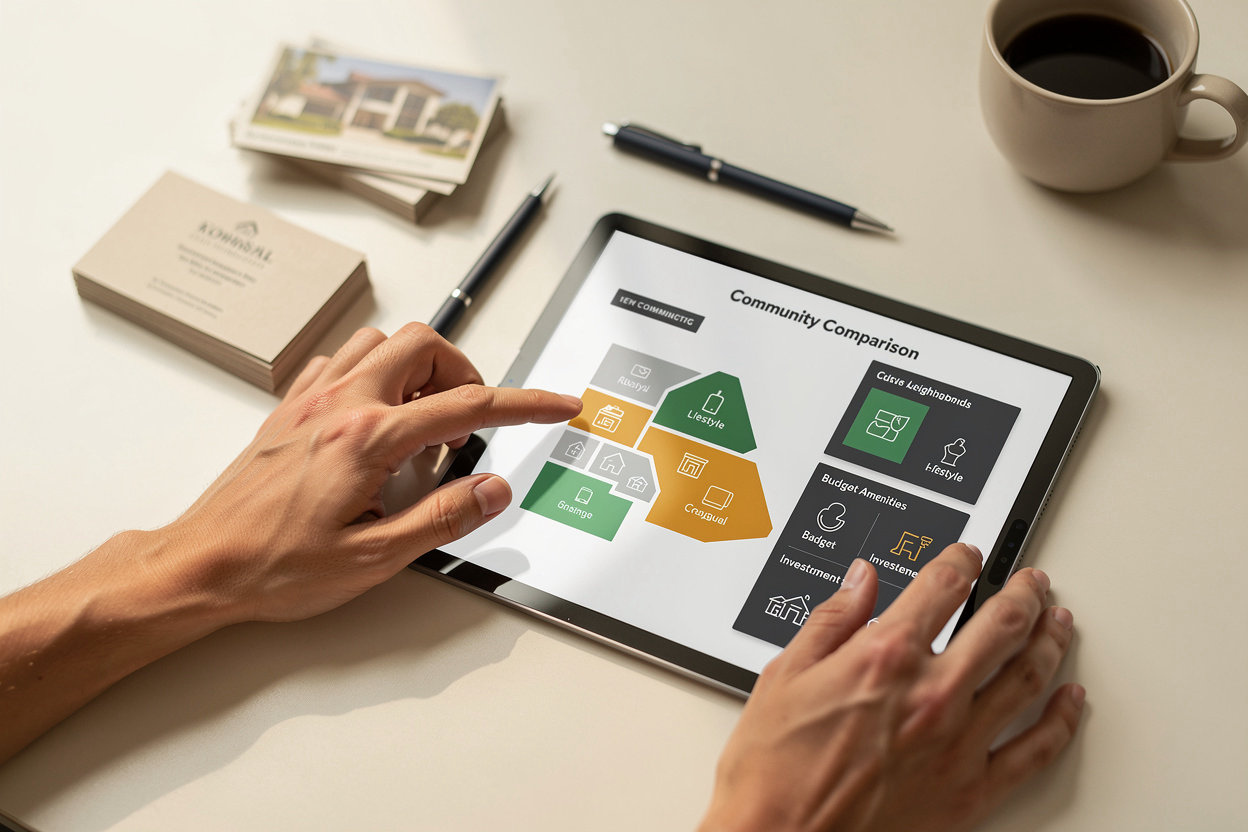
Lifestyle Fit
Different communities serve different life stages and preferences. Ask yourself:
- • Young families: Prioritize schools, parks, playgrounds, and family-friendly amenities.
- • Young professionals: Look for walkable areas, nightlife, coworking spaces, and proximity to business hubs.
- • Expats: Seek communities with international populations, familiar amenities, and cultural diversity.
- • Investors: Focus on high-demand areas with strong rental yields and capital appreciation potential.
Budget Alignment
Property prices vary dramatically across communities. Consider:
- • Luxury areas: Marina, Downtown Dubai, Palm Jumeirah (AED 1M–5M+ villas and apartments).
- • Mid-range: JVC, International City, Deira (AED 400K–900K for comfortable living).
- • Budget-friendly: Ajman, Sharjah, Ras Al Khaimah (AED 250K–500K for value-conscious buyers).
- • Villas vs. apartments: Villas typically cost 30–50% more than comparable apartments in the same area.
Key Amenities to Research
Before committing to a community, verify access to:
- • Schools: Proximity to international, private, or public schools (if you have children).
- • Healthcare: Hospitals, clinics, and medical facilities within 10–15 minutes.
- • Shopping & dining: Malls, supermarkets, restaurants, and entertainment venues.
- • Recreation: Parks, gyms, beaches, sports facilities, and community centers.
- • Public transport: Metro, bus routes, or easy access to major roads.
Investment Potential
If you're buying to invest or hold for appreciation, evaluate:
- • Rental demand: High-demand areas attract tenants and offer stable rental income (4–7% annual yield).
- • Growth areas: Emerging neighborhoods (Jumeirah Village Circle, Dubai South) offer appreciation potential.
- • Development pipeline: New metro lines, malls, or infrastructure projects boost long-term value.
- • Market maturity: Established areas are stable; emerging areas offer higher upside but more risk.
Commute & Connectivity
Your daily commute affects quality of life and long-term satisfaction. Consider:
Distance to workplace
A 45-minute commute each way can add 7.5 hours to your weekly schedule. Shorter commutes improve work-life balance and reduce transportation costs.
Public transport access
Communities near metro stations (Marina, DIFC, Downtown) offer easier commuting without a car. Others require private transportation.
Road connectivity
Proximity to major highways (E11, E101) matters if you drive. Traffic congestion varies by time of day and season.
Future infrastructure
Upcoming metro extensions, new roads, or airport links can dramatically improve connectivity and property values over time.
Who Should Live Where? Community Recommendations by Buyer Type
Young Families with Children
Best communities: Arabian Ranches, Emirates Living, Jumeirah, Springs, The Greens, Meadows.
These neighborhoods prioritize safety, excellent schools (international and private), parks, playgrounds, and family-oriented amenities. Expect to pay AED 800K–2M for a villa. Rental yields are lower (3–4%) but stability and community are high.
Young Professionals & Expats
Best communities: Marina, Downtown Dubai, DIFC, JBR, Deira, Dubai Hills Estate.
Urban, walkable neighborhoods with nightlife, restaurants, coworking spaces, and proximity to business hubs. Studios and 1-beds range from AED 400K–800K. Rental demand is strong (5–7% yield). Short commutes to major employers.
Budget-Conscious First-Time Buyers
Best communities: International City, Deira, Ajman, Sharjah Waterfront, Ras Al Khaimah.
Affordable entry points (AED 250K–500K) with lower down payment requirements. Rental yields are competitive (5–7%). Communities are developing rapidly with improving amenities. Trade-off: less premium lifestyle, longer commutes to central Dubai.
Real Estate Investors
Best communities: Jumeirah Village Circle (JVC), Dubai South, Dubai Creek Harbour, Ajman, RAK.
Emerging areas with high appreciation potential (10–15% over 5 years) and strong rental yields (5–7%). Off-plan investments offer flexibility and lower entry prices. Hold for 5–10 years for maximum returns. Higher risk but higher reward.
Luxury Buyers & High-Net-Worth Individuals
Best communities: Palm Jumeirah, Emirates Hills, Downtown Dubai Penthouses, Jumeirah Nakheel.
Premium locations with iconic status, exclusive amenities, and strong capital appreciation. Prices start at AED 1.5M and exceed AED 10M+. Lower rental yields (2–4%) but exceptional lifestyle and investment prestige. Global buyer base ensures liquidity.
How Dubai Homez Simplifies Community Selection
Evaluating neighborhoods can feel overwhelming—there's so much data to research, and one wrong choice can impact your satisfaction for years. Dubai Homez offers tools and guides designed specifically to help:
- Community comparison tools: Compare neighborhoods side-by-side by price, amenities, schools, commute time, and rental yield.
- Buyer-type matching: Get recommendations tailored to your lifestyle (family, professional, investor) and budget.
- Market insights: Access data on rental yields, appreciation trends, and growth potential by neighborhood.
- Verified listings: Browse properties in your chosen community with photos, floor plans, and neighborhood details.
Explore neighborhoods, compare prices and amenities, and find the community that fits your lifestyle and budget.
Step 3: Navigate Legal Requirements & Documentation
Buying property in the UAE involves legal processes and documentation that can feel overwhelming if you don't know what to expect. This guide breaks down every requirement, fee, and step so you can move forward with confidence.
Documents Required to Buy Property in UAE
Before you can finalize a property purchase, you'll need to gather and verify several documents. Here's the complete checklist:
Passport & Visa
Valid passport and UAE residence visa (or visit visa if purchasing as a tourist). Must be current throughout the transaction.
Salary Certificate
Official letter from your employer confirming your current salary and job title. Usually required by banks for mortgage approval.
Bank Statements
Last 3–6 months of bank statements showing your savings and down payment funds. Banks use this to verify your financial stability.
Proof of Funds
Documentation showing you have the down payment amount available (e.g., bank certificate, investment statements, or loan approval letter).
Employment Contract
A copy of your current employment contract showing job terms and salary. Some lenders require this for mortgage qualification.
Credit Report
A credit report from the UAE Central Bank (available through banks or credit agencies). Lenders use this to assess your credit history.
RERA Registration & Broker Verification
What is RERA? RERA (Real Estate Regulatory Agency) is Dubai's regulatory body that oversees property transactions and broker licensing. All property agents must be RERA-registered to legally conduct sales.
Why it matters: A RERA-registered broker is licensed and accountable. Before signing any agreement, verify that your broker's license is active on the RERA website (rera.ae). This protects you from unlicensed intermediaries and fraud.
What to check: Ask your agent for their RERA registration number and verify it online. Legitimate brokers will have no problem providing this information.
DLD (Dubai Land Department) Processes & Fees
The DLD handles property registration and transfer in Dubai. Understanding their fees and timeline will help you budget accurately.
DLD Registration Fee
The DLD charges a registration fee based on the property's value:
- Properties valued up to AED 500,000: 2% of the property value
- Properties valued AED 500,001–AED 1,000,000: 1.5% of the property value
- Properties valued above AED 1,000,000: 1% of the property value
Example: A AED 800,000 property would cost AED 12,000 in DLD registration fees (1.5% of AED 800,000).
Transfer Fee
A nominal fee (typically AED 50–100) charged by DLD to process the ownership transfer. This is a fixed cost regardless of property value.
Title Deed Issuance
Once registration is complete, the DLD issues a title deed in your name. This is your legal proof of ownership. Expect this to take 5–10 business days after all documents are submitted.
Escrow Accounts & Buyer Protection
What is an escrow account? An escrow account is a secure, third-party bank account that holds your down payment and deposits during the transaction. Your money is protected and only released when specific conditions are met (e.g., property completion, loan approval).
How it protects you: The escrow account prevents sellers from taking your money and disappearing. Your funds are held safely until the sale is finalized and all conditions are satisfied.
When you'll use it: Your real estate agent will typically set up the escrow account when you're ready to make an offer. You'll deposit your down payment (usually 10–20%) into this account, which is then held until closing.
Title Deed & Ownership Transfer
The title deed is the legal document that proves you own the property. Here's what you need to know:
What the Title Deed Contains
- Your name and ownership details
- Property location and description
- Property value and registration date
- Ownership percentage (if co-owned)
- Any liens or encumbrances
After You Receive the Deed
- Keep the original in a safe place
- Make certified copies for your records
- Update your insurance and utilities
- Register for property taxes if applicable
- You can now rent or sell the property
Complete Fee Breakdown: What You'll Pay
Buying property involves several fees beyond the purchase price. Here's a transparent breakdown so you can budget accurately:
| Fee Type | Who Pays | Typical Amount | Notes |
|---|---|---|---|
| DLD Registration Fee | Buyer | 1–2% of property value | Based on tiered rates |
| Real Estate Agent Commission | Seller (typically) | 2–4% of property value | Negotiable; sometimes split |
| Legal/Documentation Fees | Buyer | AED 1,000–3,000 | For legal review and documents |
| Property Inspection | Buyer (optional) | AED 500–2,000 | Highly recommended for peace of mind |
| Mortgage Processing Fee | Buyer | AED 500–1,500 | If financing the purchase |
| Title Deed Issuance | Buyer | AED 50–100 | DLD fee for deed creation |
| Utility Setup & Deposits | Buyer | AED 1,000–5,000 | Electricity, water, internet deposits |
| Escrow Account Fee | Buyer | AED 100–500 | Bank fee for holding down payment |
Total estimate: Budget 3–6% of the property value for all fees combined. For a AED 500,000 property, expect AED 15,000–30,000 in total closing costs.
Timeline: From Offer to Closing
Here's a typical timeline for completing a property purchase in Dubai. Timelines can vary based on complexity and lender requirements:
Make an Offer (Day 1)
You agree on a price with the seller and submit an offer through the real estate agent.
Seller Accepts & Escrow Deposit (Days 1–3)
Seller accepts your offer. You deposit 10% of the purchase price into an escrow account. Agent prepares the sales contract.
Property Inspection (Days 3–7)
You hire an inspector to check the property's condition. If issues arise, you can renegotiate or walk away (depending on contract terms).
Apply for Mortgage (Days 7–14)
If financing, you submit your mortgage application to the bank along with required documents (salary certificate, bank statements, etc.).
Mortgage Approval (Days 14–21)
Bank reviews your application and approves the loan (if qualified). You receive a mortgage approval letter.
Sign Sales Contract (Days 21–28)
You and the seller sign the official sales contract in front of a notary. Both parties agree to all terms and conditions.
Final Payment & DLD Registration (Days 28–35)
You pay the remaining balance (90%). Agent submits all documents to DLD for registration and ownership transfer.
Receive Title Deed (Days 35–45)
DLD issues your title deed confirming ownership. You're now the legal owner of the property. Closing is complete.
Total timeline: 30–60 days from offer to closing, depending on mortgage approval speed, document preparation, and DLD processing. Cash purchases (no mortgage) can close faster (15–30 days).
Red Flags & Common Legal Pitfalls to Avoid
Protect yourself by watching for these warning signs:
Unregistered or "Off-Books" Properties
Never buy a property that isn't officially registered with DLD. Without proper registration, you won't have legal ownership rights and could lose your money.
Unlicensed Real Estate Agents
Always verify your agent's RERA license. Unlicensed agents may not follow proper procedures or may mishandle your money and documents.
Skipping the Property Inspection
A professional inspection can reveal hidden defects (structural issues, plumbing problems, etc.) that could cost thousands to fix later. This small upfront investment is worth it.
Unclear Contract Terms
Never sign a contract you don't fully understand. Hire a legal review or translation if needed. Unclear terms can lead to disputes later.
Missing or Fraudulent Title Deeds
Verify the seller's title deed through DLD before committing money. Fraudulent deeds are rare but devastating. Always confirm ownership directly with the authorities.
Paying Before Escrow is Set Up
Never transfer money directly to a seller or agent. Always use an escrow account. This protects your down payment and ensures funds are only released when conditions are met.
Get Expert Legal & Documentation Guidance from Dubai Homez
Understanding the legal landscape of UAE property transactions is crucial for protecting yourself. Dubai Homez provides detailed documentation checklists, legal guides, and step-by-step walkthroughs of the entire DLD registration process—all designed to help first-time buyers navigate this complex area with confidence.
Their guides cover RERA verification, escrow procedures, fee calculations, and common pitfalls to avoid. Whether you're a first-time buyer or an investor, having access to clear, transparent legal information reduces stress and helps you make informed decisions.